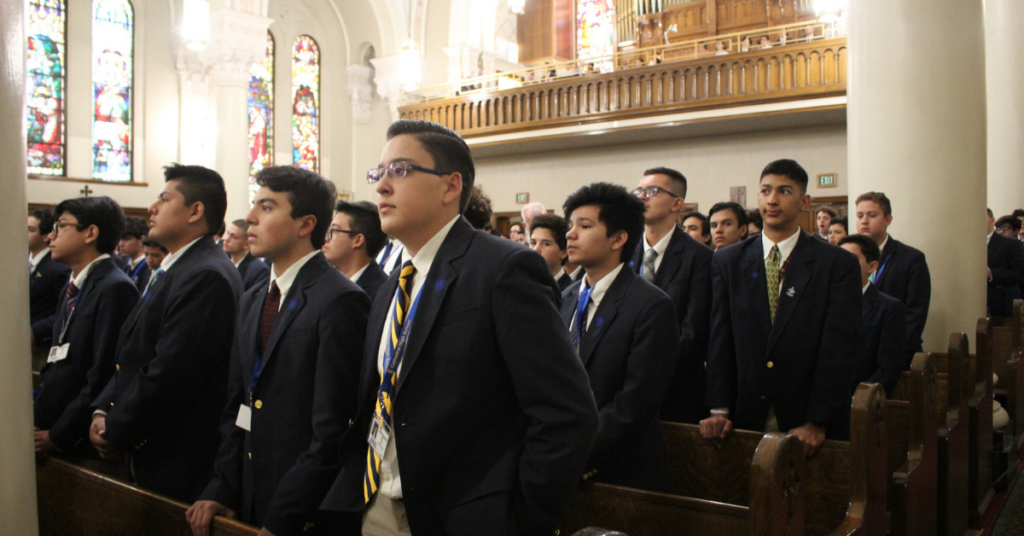
Written by Deacon Coach Saucedo, theology instructor, dcncoach@fidei.email
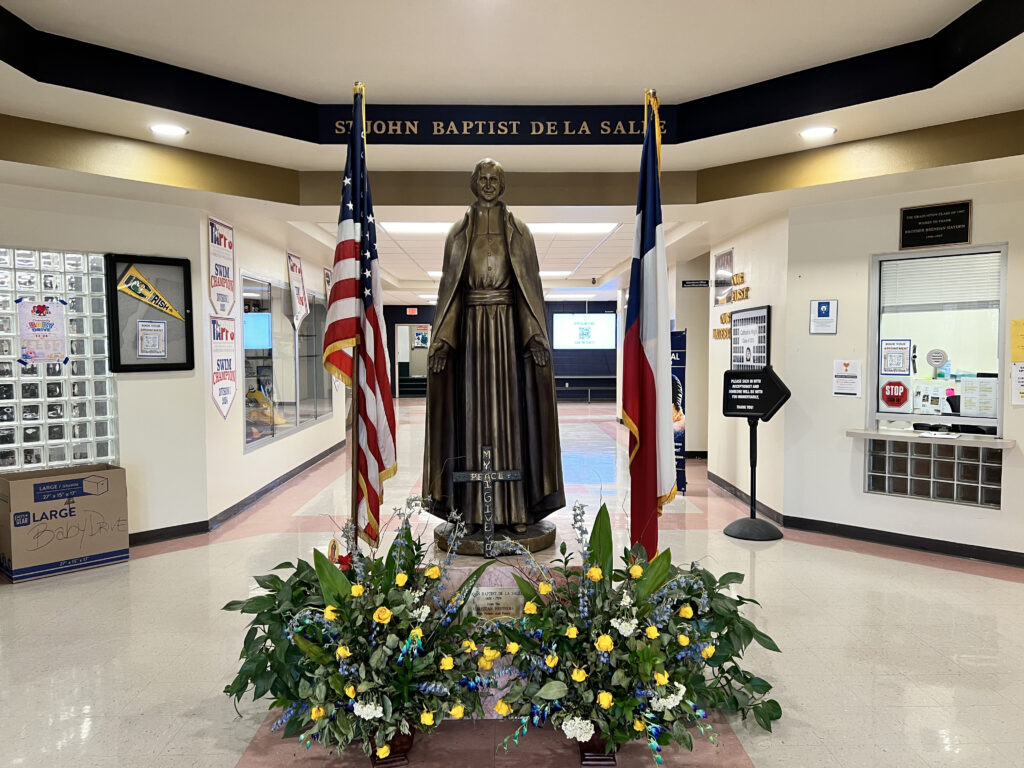
St. John Baptist De La Salle, patron saint of teachers, established a tradition for Catholic education that is more than religious instruction confined to theology classes. Lasallian teaching approaches formation comprehensively, where the values of the gospel resonate throughout every aspect of the curricula, from math class to theater rehearsals, from morning routines to athletic competitions.
It is through St. Paul’s writings and witness of faith that De La Salle found his inspiration. In them, De La Salle foresaw schools as communities inseparable from faith, merging the unifying sacred and worldly realities of Christian formation.
The Pauline Foundation of Lasallian Education
De La Salle’s love for St. Paul’s teachings led him to a more meaningful understanding of Christian community and mission. The foundation of De La Salle’s educational philosophy can be seen through St. Paul’s understanding of the Church as the Body of Christ: “we though many, are one body in Christ, and individually members one of another” (Romans 12:5). The transformational and redemptive nature of Christ’s mission is reflected in De La Salle’s understanding that schools should function as living communities of faith through the active participation between teachers and students.
Furthermore, the Lasallian charism is established through Paul’s exhortation to “put on the mind of Christ” (Philippians 2:5) and resonates throughout the Lasallian pedagogy. De La Salle felt the educational process was more than just gaining intellectual knowledge, but that the heart and mind should be cultivated and reoriented toward gospel values. The entire educational process must be infused with this transformational understanding of shaping how students learn, create, compete, and relate to one another and cannot be relegated to isolated moments of prayer and religious instruction.
Faith in the Classroom: Teaching as Ministry
The classroom becomes a sacred space within the Lasallian tradition. “Whatever you do, do everything for the glory of God” (1 Corinthians 10:31) is echoed by De La Salle’s view that teaching is a ministry. This perspective transforms even those whose beliefs are not focused on God. In the Lasallian classroom, ministry of teaching is understood as ripe with the possibilities of encountering divine truth and cultivating Christian virtue daily in the classroom.
Paul’s teaching that “love is patient, love is kind” (1 Corinthians 3:28) is demonstrated by the teacher who is patient with a struggling student. Likewise, the history teacher that explores themes of justice and human dignity helps the student encounter the revolutionary declaration of Paul to the Galatians; “there is neither Jew nor Greek, slave nor free, male nor female, for you are all one in Christ Jesus” (3:28). Within the instruction of science, the students are exposed to the beauty of God’s creation, while in a literature class the depth of human experience through the lens of redemption and grace are explored.
According to De La Salle, living the gospel is announced through the life the teacher leads, for the witness of the educator speaks more profoundly than words alone. Paul, through his epistles, championed compassion, integrity, and dedication. Following Paul’s example, the teacher demonstrates these qualities and thus models them for their students. Bearing witness coupled with living Paul’s words makes the teacher’s presence a living curriculum from which students learn what it means to live as disciples in the world.
Curriculum as Integrated Formation
In the Lasallian classroom faith and knowledge are not artificially separated. Indeed, finding all truth as sourced in God grounds a truly Catholic curriculum. Both religious formation and classroom learning must be harmonious in nature to enrich each other. The Lasallian integrated approach is undergirded by Paul’s affirmation that “all things were created through him and for him” (Colossians 1:16).
Knowledge under God is united and revealed in the connections made on how Lasallian schools intentionally design curricula, such as the theological themes explored in an English class studying Flannery O’Connor or Graham Greene, and examination of Catholic social teaching in social studies connected to historical events. The dignity of humanity and stewardship are observed by the students in biology who consider the ethical implication of scientific advances. The divine mathematician is revealed through the order, pattern, and beauty of mathematics.
The content of pedagogy itself is extended within this integration, while the Christian call to community is reflected in collaborative learning, and Paul’s exhortation to “bear one another’s burdens” (Galatians 6:2) is embodied in service-learning projects. Rounding out integrated curricula is the conviction that “There are varieties of gifts, but the same Spirit” (1 Corinthians12:4), which is honored by the unique gifts God has given each student through the implementation of differentiated instruction.
Arts and Activities: Celebrating God’s Creation
Humanity’s creation in the image of God is reflected in our creativity and De La Salle recognized this fact. The arts within Lasallian schools are vehicles of worship, wonder, and witness. Participation in the human vocation where beauty and meaning are created are displayed every time students perform in choir, paint in art class, or act in a school play.
Meanwhile, the athlete and student in physical education exemplify Paul’s teaching that our bodies are “temples of the Holy Spirit” (1 Corinthians 6:19). The lessons about sacrifice, discipline, and teamwork are learned on the field and gyms teaching them virtues essential to Christian discipleship. Furthermore, integrity and respect for opponents are learned during competitions, and grace, humility, and resilience are taught in moments of victory and defeat.
Living out gospel values are also provided by student clubs and organizations. A club focused on justice addresses Paul’s concern for the marginalized. Care for creation as faithful stewardship are practiced by environmental clubs. The life blood of these organizations that engage students in prayer, service, and spiritual formation through participation in the sacraments, especially the Mass and confession, are created by campus ministry programs.
Daily Rhythms: Sanctifying Time
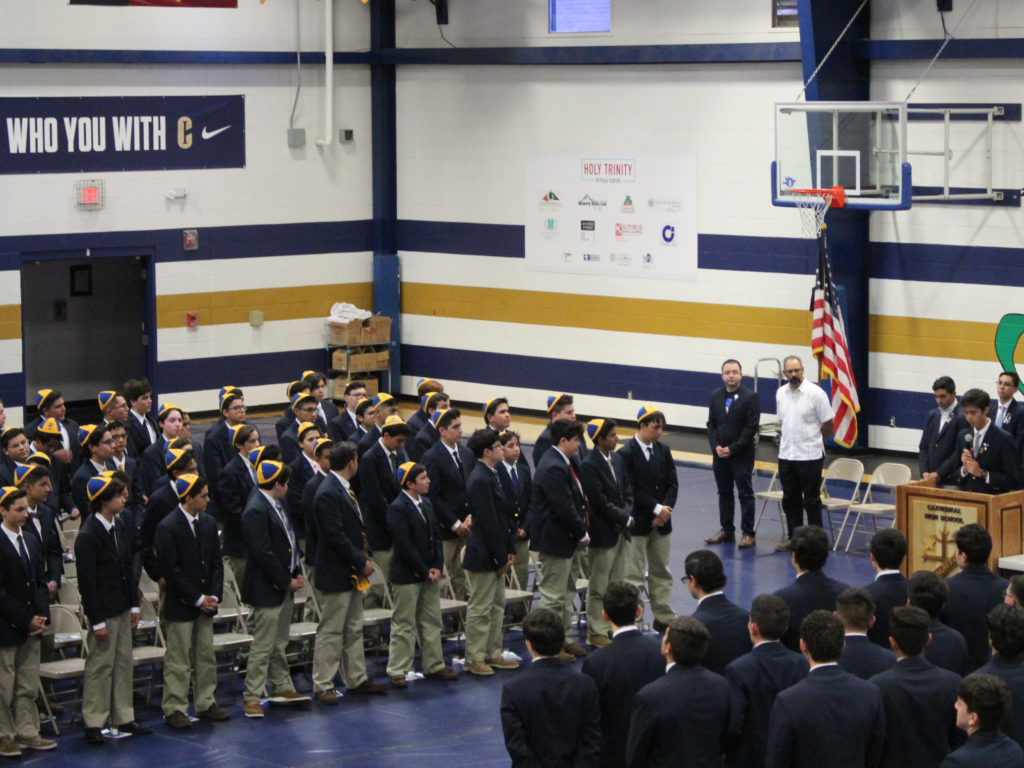
The daily rhythms of Lasallian school life are where faith integration is most evident. Each day founded in prayer allowed De La Salle to create what he called a “school conducted in a Christian manner.” Daily, the community gathers through morning prayers to acknowledge the presence of God and invite divine guidance. Prayers are integrated before meals transform lunch into the act of thanksgiving, and students are encouraged to examine their consciences and recognize God’s movements in their lives during end-of-day reflections. All these routines grounded in prayer and reflection help to transform the school’s spiritual culture.
These moments of ritual also create an environment of “praying without ceasing” (1Thessalosians 5:17) described by Paul. De La Salle emphasizes helping students recognize the presence of God at all times of the day. For students reminded to call God’s presence to mind, prayer and worship become lifelong endeavors and not merely designated religious moments.
Incorporating learning with the rhythm of the liturgical year of Advent, Lent, and Ordinary time further enhances and shapes the life of the school. The Catholic traditions where feast days become celebrations, opportunities for reflection open on holy days, and the transitions of seasons create space for preparation, penitence, and joy.
Conclusion: Living Stones in God’s Temple
The inspiration found in St. Paul afforded for St. John Baptist De La Salle an opportunity to encounter and express the true vision of Christian community and mission. This helped him create an educational model founded in faith that pervades every aspect of school life. The objective living of gospel values definitively taught is lived concretely in the Lasallian school. The faith of the student who graduates from a Lasallian school is fully understood and shapes every aspect of their life, creating a Catholic global perspective integrating faith with the realities of the world.
As Paul writes, believers are “the temple of God” and his “Spirit dwells” (1 Corinthians 3:16) in them. The students at Lasallian schools become God’s temple. They are formed, shaped, and prepared to build the kingdom of God in the world beyond the classroom.
