Written by Maria Del Amo, director of Hispanic and Latino engagement, NCEA, maria@ncea.org
Picture a parent opening an email from her child’s Catholic school. She notices the date and knows she needs to do something, but the specifics aren’t clear. Does she have to go to a meeting? Fill in a form? Apply for tuition assistance? Because of this lack of clarity, she sets the email aside until someone can help her.
Imagine receiving that same message in your own language, with clear directions and a named contact. Then she can ask questions, make decisions on her own, and respond directly.
This difference should shape how we think about involving families. If we are going to ask parents to take a partner role in Catholic education, then we must allow them to participate in those discussions.
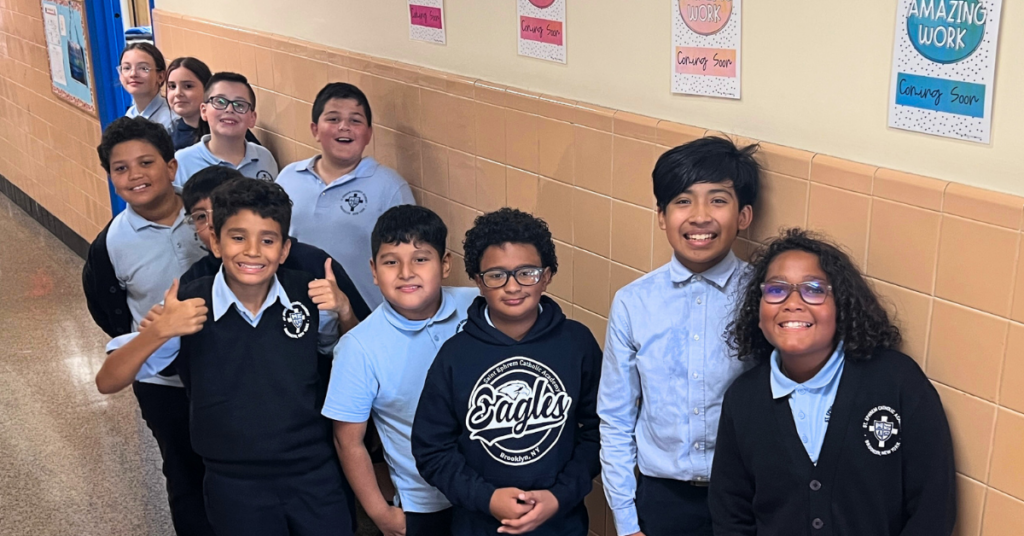
‘We also learned that communication needs to be personal. Sometimes a conversation at the school entrance or during an event can accomplish more than a formal meeting,” says Michael Phillips, principal of St. Ephrem Catholic Academy.
Why Language Preferences Matter
Many Hispanic and Latino families speak in Spanish when giving their children a “blessing” from their abuelas (grandmothers), praying with them before bedtime, and discussing what their child’s future will look like. Parents often feel comfortable speaking English during work hours but may switch to Spanish when raising an issue or sharing something personal. Bilingual communication allows families to bring those aspects of their lives into their relationship with the school.
Spanish also has significance across generations. According to a 2023 report based on a 2022 Pew Research Center survey, 85 percent of U.S. Latino adults felt it was at least somewhat important that future generations of Latinos speak Spanish. The same report showed that 78 percent did not believe that speaking Spanish is necessary to be Hispanic. The results remind us to accept and respect a family’s preferred language(s), regardless of whether it relates to a person’s identity.
Building Clear, Accessible Communication
First, the school needs to ask every family which language they prefer for all written communications and for communication with teachers/other staff. Family preferences can also differ. Some families will prefer English, while others will choose Spanish, etc. A parent’s fluency in English does not indicate their preferred language.
For Catholic school educators, this care in communication comes directly from our understanding of the family. In Gravissimum Educationis, the Church identifies parents as their children’s primary educators and also outlines the important role that families play in cultivating both faith and social development. If this teaching is to be taken seriously, parents must have the opportunity to understand, ask questions about, and participate in their children’s education.
Imagine a student having difficulty in class; the teacher should explain what is going on and, at the same time, listen to what the parent has observed at home. A translated report can support this exchange, but parents also need a way to ask questions and share observations. Colorín Colorado recommends communicating in families’ preferred languages, providing understandable translations, and using an adult interpreter rather than relying on the student.
Additionally, schools should apply this same level of care throughout the entire communication process, from initial contact through the final step of re-enrollment. For example, a Spanish version of an invitation to an “Open House” can set expectations for the school. Once families are invited, they need direct access to information about tuition, additional fees, financial aid, and the specific steps required to enroll. Notre Dame’s Madrinas Model guide recommends Spanish registration materials, bilingual front office support, and personal follow-up with prospective families.
Today’s technology can help schools sustain communication in several languages. One example is Talking Points, which uses Artificial Intelligence (AI) to translate educator-to-family communications, provides human translation support, offers video captioning in multiple translated forms, and enables two-way communication through speech-to-text and text-to-speech functionality.
Schools should evaluate their current communication systems against these features. The AI translation feature allows schools to send routine reminders and updates about classroom activities regularly. Schools should start with a clear, concise original message, then have a competent bilingual staff member review and verify the translation for tone, dates, and terminology used in either school or religious contexts. Additionally, schools should use approved technologies to protect family information. However, if the communication requires sensitivity or complexity, schools should make arrangements for a qualified interpreter to be present during the communication process and allow sufficient time for families to ask questions. Furthermore, schools should ensure families can respond in their preferred language(s) and/or have a mechanism to reach out to someone who can clarify any aspects of the communication.
Putting Bilingual Communication Into Practice
A parent survey at the start of the year can help schools to identify these needs early. Schools already conducting family surveys for accreditation or as part of improvement planning can include questions about communication in their local survey or in an accompanying form. For example, Cognia includes family and caregiver perception surveys as part of its improvement platform. When deciding how to collect this feedback, schools should follow their accreditor’s requirements. Cognia and perception surveys and tools will help us understand how we are improving. Ask each parent/caregiver the following questions.
- Which of the two languages (written/spoken) do you want used for all written correspondence from your child’s school?
- How would you like to get regular school updates? Text message, e-mail, call, printed notice, or school app?
- Would having an interpreter at a meeting with your child’s teachers and/or administrators be beneficial to you as a parent/guardian?
- What barriers exist that make it difficult for you to receive/access information from your child’s school, and what can the school provide to assist you with better understanding the communication?
Offer the survey in the languages families speak, with the option to complete it on paper or with assistance. If the accreditation survey is anonymous, ask families for their communication preferences separately so staff can act on them. Use the results to update contact details, plan interpretation services, and decide which communication channels to use.
“I would tell other schools not to assume that families are not interested simply because they are not immediately involved,” Phillips explains. “Sometimes families need to be invited more than once. Sometimes they need someone to reach out to them personally. And sometimes we have to change the way we communicate or create opportunities for families to participate.”
School leaders can put these principles into everyday practice by following these steps:
- Begin with messages that ask for a decision or involve an action. Take some time to review the details related to enrolling students (enrollment process), tuition support options (tuition), invitations for parent/teacher conference opportunities, and timely reminders. Also, provide complete information in the family’s preferred language. Designate one person responsible for ensuring consistency across the multiple translations as date(s) or requirement(s) are modified.
- Provide families with an opportunity to respond clearly. With each major notice/communication, identify a contact and describe how the contact will receive assistance in their preferred language. Arrange a qualified adult interpreter for any substantial conversations. Staff should know how to ask for this support before a meeting starts.
- Check that understanding has been achieved. Use simple language and explain any school-specific terms. Include information on what will be expected if a student needs to re-enroll and whether there will be a cost associated with enrollment. Have a bilingual person review the translation to verify accuracy. Make it easy for families to identify areas where your instructions are unclear. Ask “How else can I explain?”
- Involve Families in the Spiritual and Joyful Aspects of School Life. Use bilingual communication not only when sharing negative news. Use bilingual communication when sharing positive messages about students’ classroom experiences; provide prayer resources; and communicate opportunities for family involvement as part of the planning process for school events. Provide an opportunity for families to share prayer and cultural practices that are meaningful to them, but do not expect families to represent all people of a particular culture.
Catholic Schools are working towards this model. A 2023 Profile of St. Veronica Catholic School, Philadelphia, by the Alliance for Catholic Education (ACE) at Notre Dame University showed how a school used Home Language Surveys to organize data for decision-making. Staff members also labeled classrooms, hallways, etc., in both Spanish and English. A practical starting place is to determine what languages families speak at home and then allow that knowledge to inform your day-to-day interactions with families.
To assess progress toward this goal, don’t simply count the number of documents translated. Evaluate whether families understand what the school has sent; know who to contact at the school; and feel comfortable asking for clarification. Identify those areas in the application process where families may need additional support and/or identify those areas where families may be hesitant to ask questions due to barriers created through lack of clarity in communication. Target the areas identified for improvement in the next cycle.
This month, select one message that encourages families to take action. When viewed from the point of view of a parent who is encountering your school’s procedures for the first time, is the following step clear? Is it easy to get help? Can the parent respond in the language they are most comfortable with?
The language used at home should be accepted as part of the life of a Catholic school. Only by making space for it can we put our commitment to partnership into action and make it simpler for families to share their questions, their faith, and their hopes about their children.
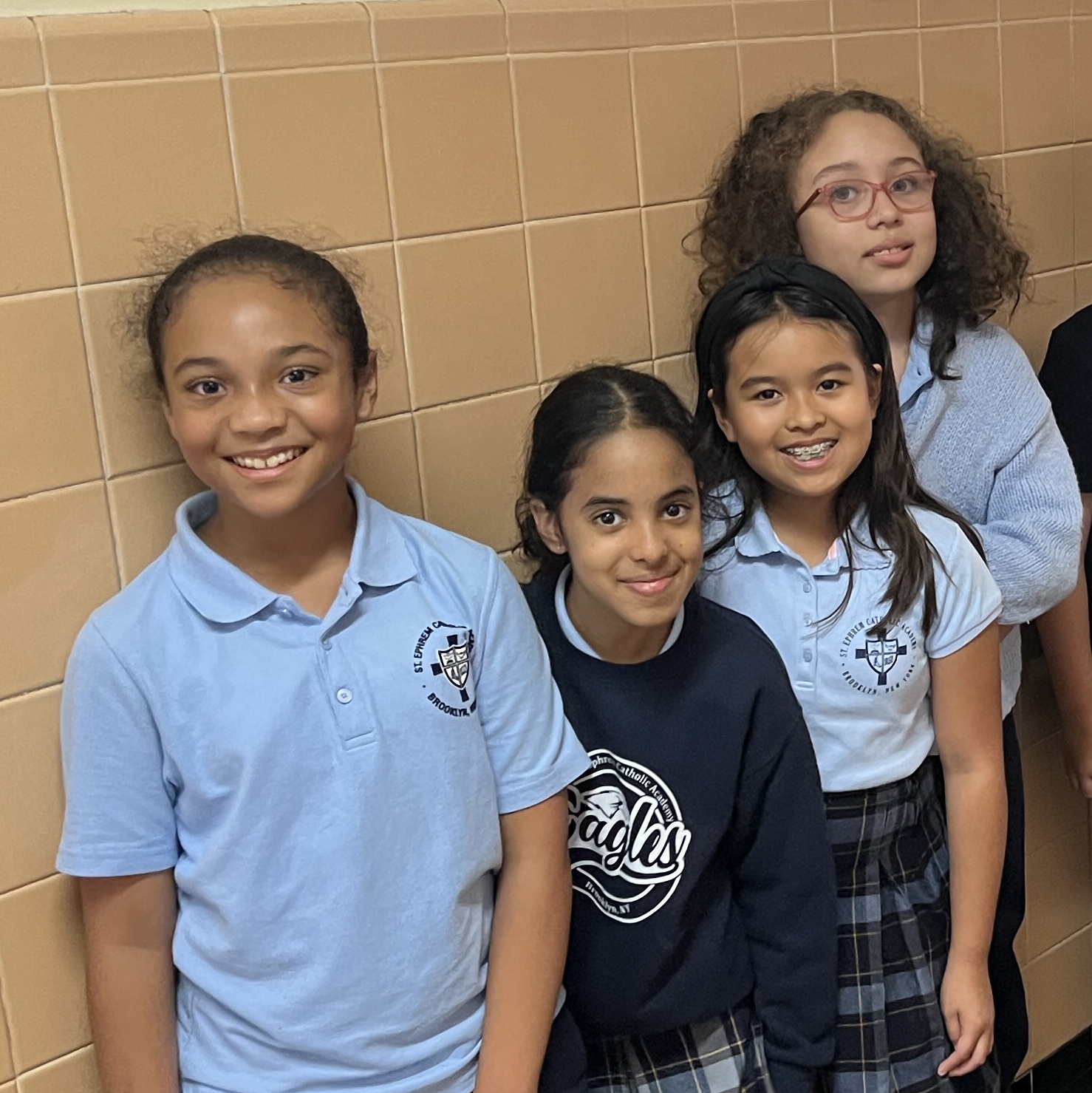
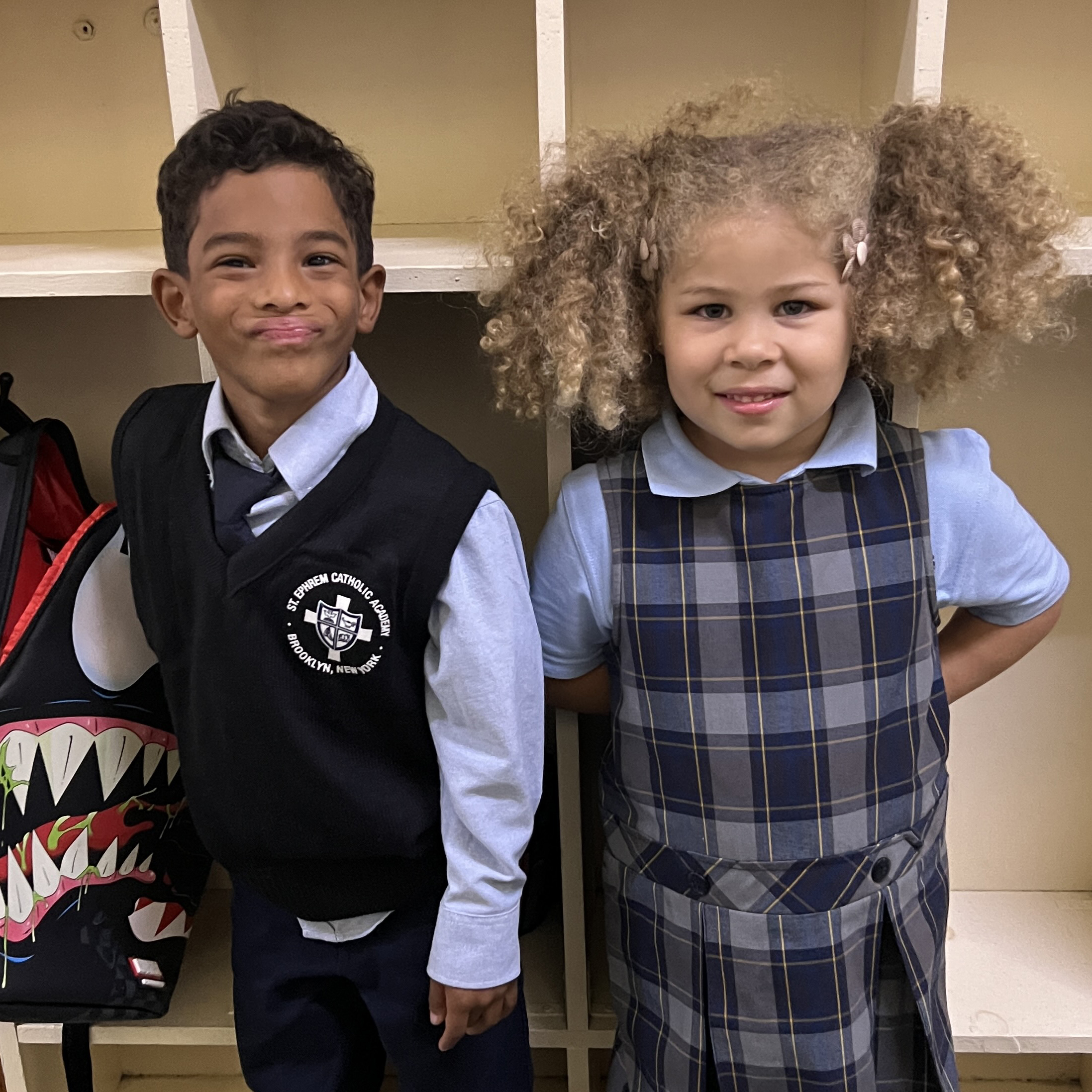
Photos provided by St. Ephrem Catholic Academy in Brooklyn, NY

Connect with Maria Del Amo
If you’d like to learn more about how we can support and engage Hispanic and Latino families in Catholic education, I’d love to connect! Feel free to reach out to me at maria@ncea.org.
